
The Hamerkop: Tanzania’s Unusual Bird with a Hammer-Shaped Head
Meet the hamerkop, a distinctive African wetland bird known for its hammer-shaped head, unusual nest and patient hunting behaviour.
Introduction
The hamerkop is a fascinating bird that is often found around rivers, lakes and wetlands in Tanzania. Its name comes from its head shape, which is said to resemble a hammer.
Although it is not as colourful as some African birds, its unusual appearance, feeding behaviour and enormous nest make it well worth watching.
How to Identify a Hamerkop
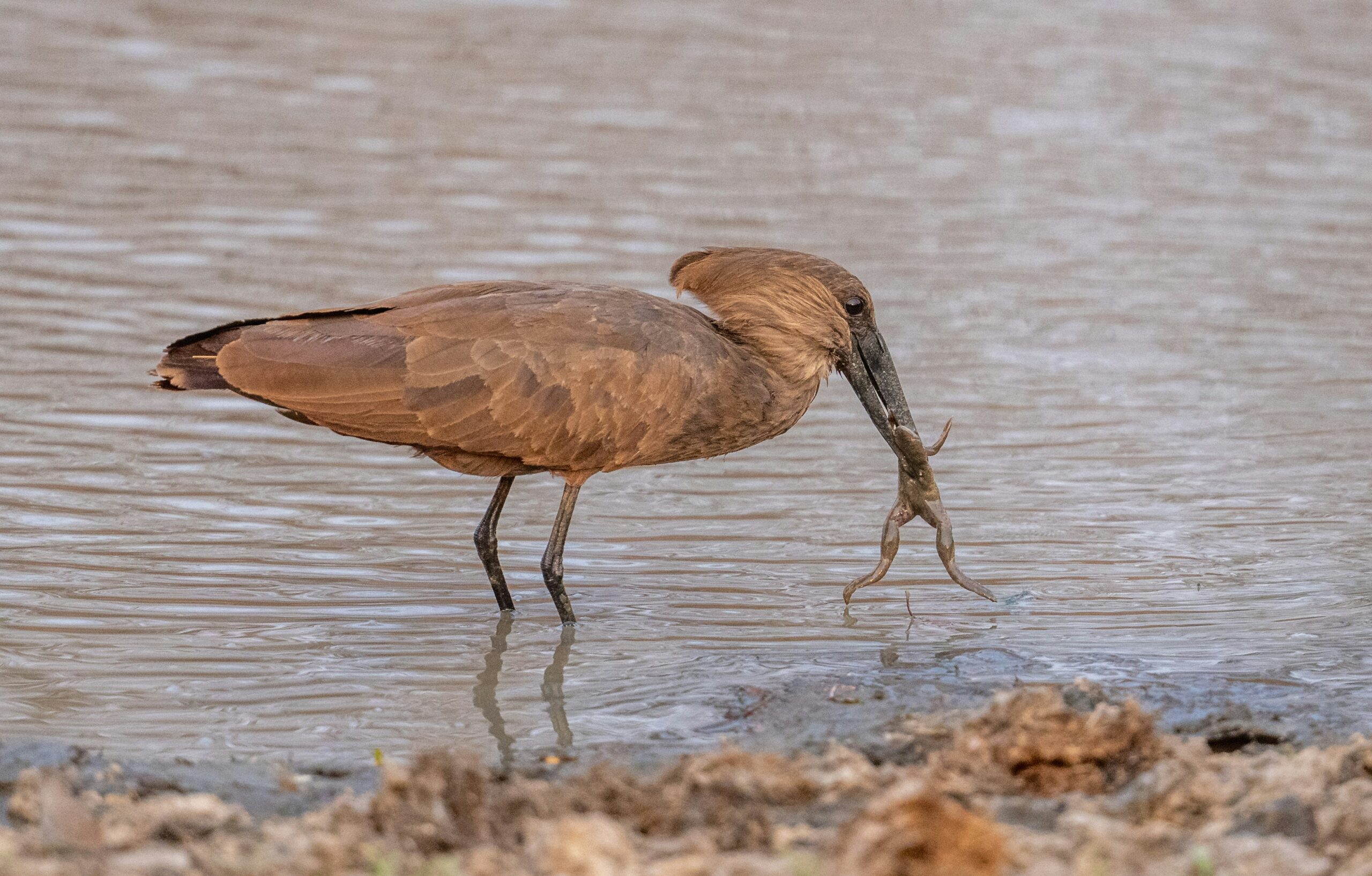
The hamerkop is a medium-sized, brownish bird with a long bill, sturdy legs and a distinctive head profile. Its neck and bill form a shape that becomes especially noticeable when viewed from the side.
It is often seen alone or in pairs, moving along the edges of shallow water.
Feeding Around Water
Hamerkops feed on aquatic animals such as frogs, fish and small invertebrates. They search through shallow water and wet vegetation, using their bills to catch prey.
They may move methodically along a water’s edge, making them rewarding birds to observe during a quiet stop on safari.
The Remarkable Hamerkop Nest
One of the hamerkop’s most fascinating features is its large, domed nest, usually built from sticks and other plant material. The structure can become very substantial and is often placed in a tree or another elevated location.
Hamerkops may invest considerable effort in nest construction, and an old nest can remain a striking feature of the landscape.
Where Can You See Hamerkops in Tanzania?
Hamerkops are widespread in suitable wetland habitats across Tanzania. You may encounter them around rivers, ponds, lakes and seasonal pools, including in and around protected areas such as Tarangire National Park.
Look for them near shallow water or perched in trees beside wetlands.
Protecting Their Wetland Homes
Clean water and healthy riverbanks support hamerkops and a wide range of other wildlife. Avoid littering, disturbing nests or leaving designated safari routes to approach birds.
A Bird in a Family of Its Own
The hamerkop (Scopus umbretta) is the only member of its family. Scientists have long debated its relationships, and it is now placed close to pelicans and the shoebill.
It is around 50 to 56 centimetres long. The name comes from Afrikaans and means hammerhead, referring to the backward-pointing crest that balances the long bill.
Inside the Giant Nest
A hamerkop nest can be more than a metre and a half across and may contain thousands of sticks, along with mud, grass and other material. Inside is a chamber lined with mud, reached through an entrance on the side.
Pairs may build several nests even when they do not breed in them. Abandoned or unguarded nests are often taken over by other animals, including owls, eagle-owls, geese, snakes and small mammals.
Unusual Feeding Habits
Hamerkops often shuffle one foot in shallow water to disturb prey, then grab it with the bill. They also fish in flight, dipping down to pick prey from the surface.
They are sometimes seen standing on the backs of hippos, using them as a platform to hunt from.
Folklore
In many African cultures, the hamerkop is surrounded by stories and beliefs. In some places it has been called the lightning bird, and disturbing its nest has traditionally been considered bad luck.
Frequently Asked Questions
Why is it called a hamerkop?
The name means hammerhead in Afrikaans. The crest at the back of the head and the long bill together create a hammer-like shape.
How big is a hamerkop nest?
Nests can be more than 1.5 metres across and can hold the weight of an adult person. They are among the largest nests built by any bird.
Where are hamerkops easiest to see?
They are common near water across Tanzania, including Tarangire, Lake Manyara, Arusha National Park and along rivers in the Serengeti.
Look Closely at the Smaller Details
The hamerkop shows that even a familiar-looking wetland can contain remarkable natural history.
Explore Tanzania with Africa Amaze and discover the interesting behaviours that make its birdlife so rewarding.
Read next