
Stone Town: the architecture of a trading port
Stone Town was built by traders from the Swahili coast, Oman, India and Europe, and each left a mark on its buildings. Once you know what to look for, the town reads like a record of who passed through.
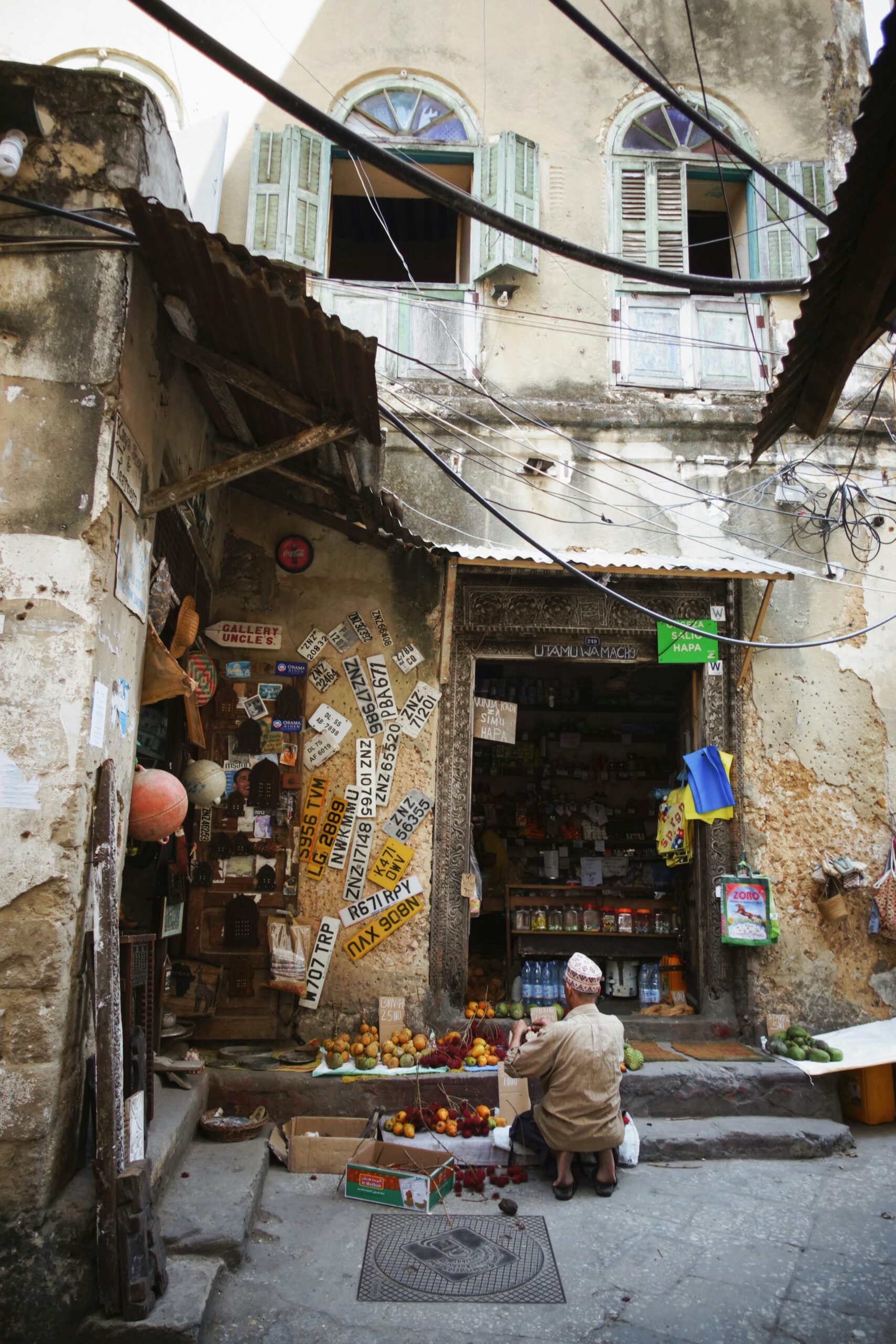
A town built from the sea
Stone Town is the old centre of Zanzibar City and a UNESCO World Heritage Site. Most of its houses date from the nineteenth century, when Zanzibar was the capital of the Omani sultanate and the main trading port of the East African coast.
The buildings are made from coral rag, a porous coral stone, bound with lime mortar and finished with lime plaster. The material stays cool, but it needs constant upkeep in salt air and heavy rain, which is why many buildings look worn.
Why the lanes are narrow
The lanes are narrow and winding on purpose. Tall houses shade the streets and funnel sea breezes through the town. Most lanes are too narrow for cars, which is part of why the old town has kept its character.
The doors
Stone Town is known for its carved wooden doors. There are several styles:
- Omani, or Arab, doors are rectangular, with a heavy carved frame and a lintel often carrying a verse from the Qur’an.
- Indian doors often have rounded tops and are studded with brass bosses.
- Swahili doors combine elements of both.
Carvings often include chains, representing security, or lotus and date palm motifs, representing prosperity. A carved door was a statement of the owner’s standing, and it was often made before the house.
Baraza benches
Many houses have a stone bench, the baraza, built along the front wall. It is where neighbours sit in the evening to talk, play board games and drink coffee, and it is still in daily use.
Landmarks for a walking tour
- Old Fort
- seventeenth-century Omani fort, now a cultural centre
- House of Wonders
- the sultan's palace, under restoration after a partial collapse in 2020
- Old Dispensary
- carved balconies, Indian style
- Anglican Cathedral
- built on the site of the last slave market
- Forodhani Gardens
- seafront, evening food stalls
The slave market site
The Anglican Cathedral stands on the site of the slave market that closed in 1873. The memorial and the underground chambers below the neighbouring building are a necessary part of understanding the town’s wealth and history.
Questions we get asked
Questions we get asked
One or two nights. A walking tour, the spice farms outside town and an evening at Forodhani are enough for most visitors.How long do I need in Stone Town?
Generally yes in the main lanes and around Forodhani. Keep valuables out of sight and use a guide if you want to explore further.Is it safe to walk at night?
Read next