
The African Goshawk: A Forest Hunter of Tanzania
Discover the African goshawk, its forest hunting techniques and the habitats where birdwatchers may encounter this agile raptor in Tanzania.
Introduction
Not all birds of prey hunt in open skies.
Some depend on speed and agility among trees, where a quick turn or a sudden burst of flight can make the difference between catching prey and going hungry.
The African goshawk is one of these woodland hunters. Its compact shape, strong feet and alert behaviour make it well suited to hunting in areas where vegetation can limit visibility.
For travellers interested in Tanzania’s forests, learning about this raptor adds another dimension to birdwatching.
How to Identify the African Goshawk
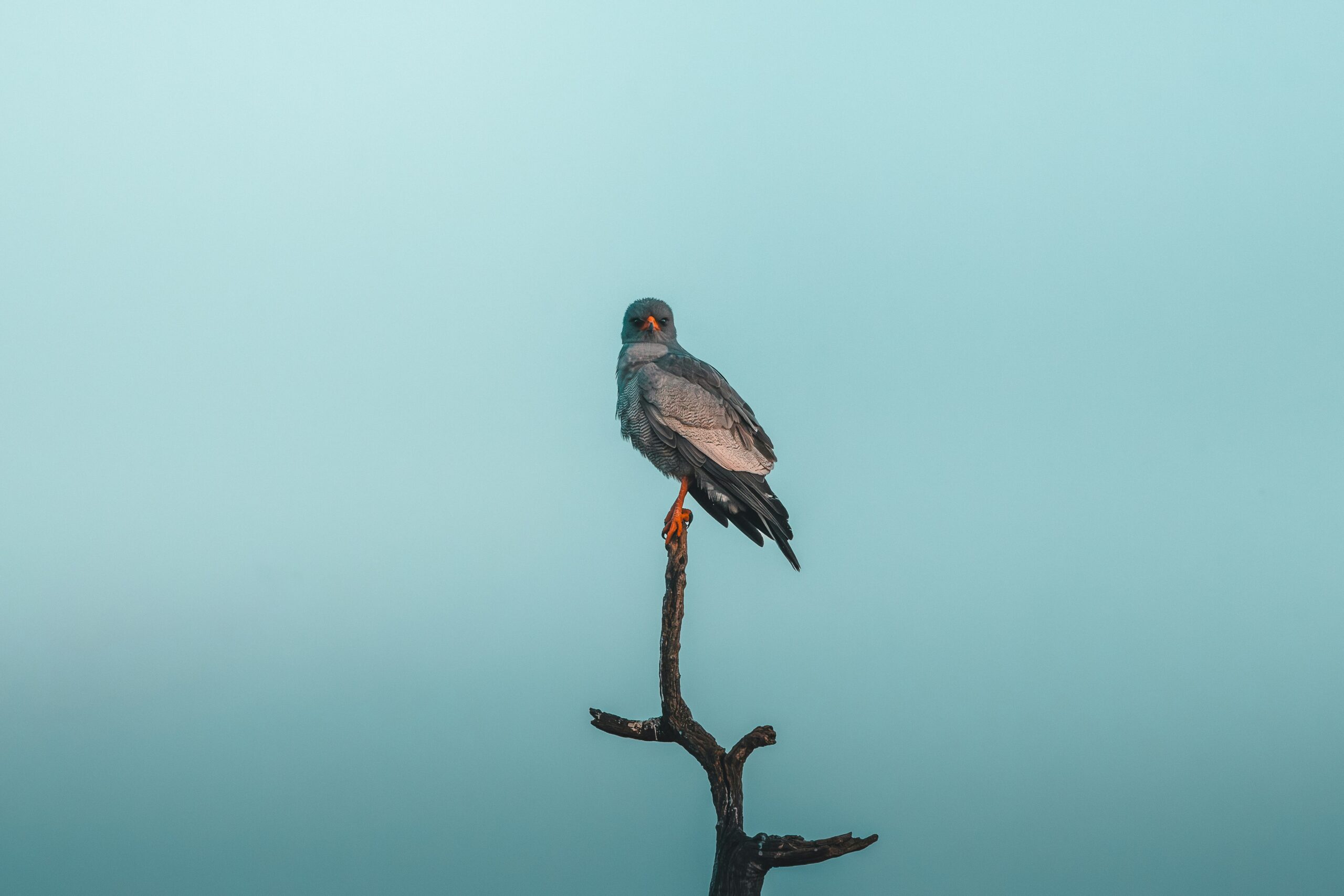
The African goshawk (Accipiter tachiro) is a forest and woodland raptor found in sub-Saharan Africa.
Adults generally have greyish upperparts, pale underparts with dark barring and a relatively long tail. Their short, rounded wings help them manoeuvre through trees.
Females are generally larger than males, as is common among many birds of prey.
Because several hawks and goshawks can look similar, careful observation is important. Size, plumage, tail shape and habitat all help with identification.
How Does the African Goshawk Hunt?
The African goshawk is an agile predator that feeds on birds and other small animals.
It may wait quietly in vegetation before launching a rapid attack, or move through woodland in search of prey.
Its rounded wings and long tail are useful for manoeuvring around branches. Its sharp talons help capture prey, while its hooked bill is adapted for feeding.
These hunting techniques are different from those of eagles that spend more time soaring over open country.
Where Can You Look for It in Tanzania?
The African goshawk is associated with forest and woodland habitats.
Arusha National Park: Its forested slopes and woodland areas provide opportunities to search for forest raptors. The species is included in the park’s bird checklist. <Cite refs={[“turn193738search1”]}/>
Lake Manyara National Park: The park’s groundwater forest and other wooded habitats offer opportunities to observe forest birds.
Other suitable forest reserves and protected landscapes: Tanzania has several forest habitats that support diverse bird communities, although sightings should be checked against local records.
For a specialist birdwatching trip, a guide familiar with forest birds can be particularly helpful because this species may remain hidden within vegetation.
Why Are Forests Important for Raptors?
Forests provide hunting areas, nesting sites and shelter for many bird species.
When forests are fragmented or cleared, birds that depend on connected woodland may lose access to suitable habitat.
Conserving forests therefore helps protect not only rare endemic species but also more widely distributed birds such as the African goshawk.
How to Photograph a Forest Hawk
Forest photography can be challenging because light levels may be low and branches can obscure the bird.
Use binoculars to locate the goshawk first. If a clear view becomes available, try to focus on the eye and head while retaining enough of the body to show its markings.
Avoid using repeated flashes or approaching a nesting bird.
Sometimes the best observation is simply watching the bird move naturally through its habitat.
Why Should You Learn About the African Goshawk?
The African goshawk demonstrates how birds of prey can adapt to very different environments.
Instead of hunting over open plains, it relies on agility and surprise among trees. This makes it a fascinating species for travellers interested in Tanzania’s forest ecosystems.
Explore Tanzania with Africa Amaze and discover the extraordinary diversity of birds living beyond the open savannah.
Read next